Client-side browser utilities for PDF vector extraction, cryptographic key generation, WCAG contrast auditing, and media compression running 100% in local RAM.
Machine-to-machine HTTP endpoints and edge microservices for dynamic Open Graph social card synthesis, Unicode sanitization, and mock fixture generation.
Stateless event-driven Python bots for Base64/cURL developer transforms, in-memory QR and Code 128 synthesis, supergroup moderation, and WordPress publishing.
Convert PDF pages into high-quality, scalable vector SVG files directly in your browser. Extract clean XML markup, vector paths, and downloadable ZIP archives.
A Manifest V3 Chrome Extension and Side Panel companion powered by the Delphi Price Oracle to track PlayStation Store price drops across 50+ regions with native-currency isolation, All-Time Low detection, and GraphQL search.
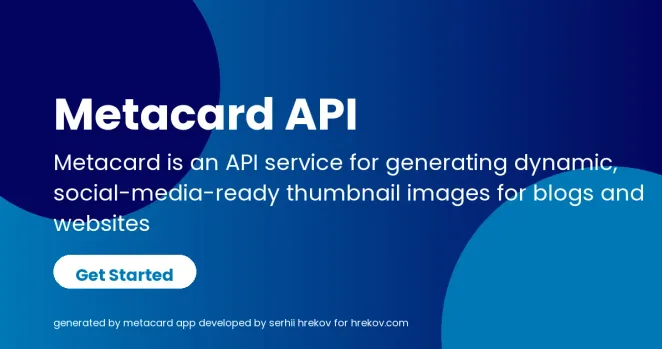
Dynamic social card generation API for blogs and websites. Generate customized Open Graph and Twitter Card thumbnails via URL parameters with edge caching.
Convert DRM-free EPUB ebooks to clean, formatted A4 PDF documents directly in your browser. Preserves typography, chapter images, and book spine order locally.
Combine and reorder multiple PDF documents into a single contiguous file directly in your browser. Lossless vector quality, in-memory execution, and zero cloud uploads.
Convert GitHub Flavored Markdown (GFM) into clean, high-resolution A4 PDF documents directly in your browser with code blocks, tables, and typography controls.
Convert Word documents, Google Docs, or formatted rich text into high-quality A4 PDF files directly in your browser. Preserves formatting, colors, headings, and lists.
Generate 5-color palettes compliant with WCAG 2.1 Level AA and AAA standards. Test contrast ratios, inspect relative luminance, and export accessible design tokens.
Extract exact pixel colors from uploaded images or pasted screenshots in HEX, RGB, HSL, HWB, and CMYK. Features a 11x11 magnifying loupe and color history.
Instantly convert colors between RGB, HEX, HSL, HWB, and CMYK with integrated WCAG 2.1 contrast calculations, tints and shades palettes, and CSS token export.
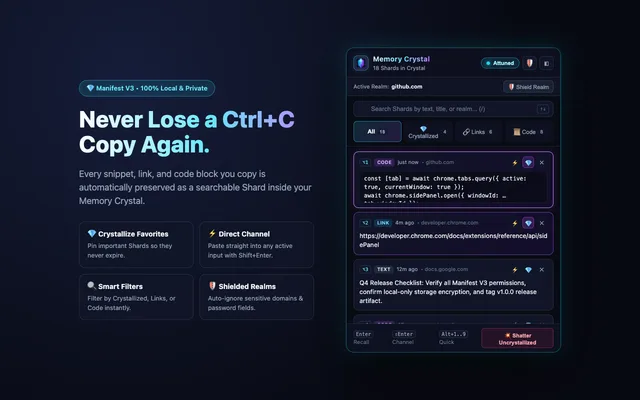
A Manifest V3 Chrome Extension that preserves everything you copy as searchable Shards. Pin favorites, filter links and code snippets, and channel copies directly into active inputs.
Scan, detect, and strip Unicode emojis from text payloads. High-performance browser utility and API pattern for NLP preprocessing and database encoding.
Fast, reliable HTTP API and live interactive playground to generate customizable random strings for test fixtures, mock data, and development placeholders.
Stateless Python Telegram bot using Pillow (PIL) and in-memory BytesIO streams to pad portrait and landscape photos with white, black, transparent, or Gaussian blur borders.
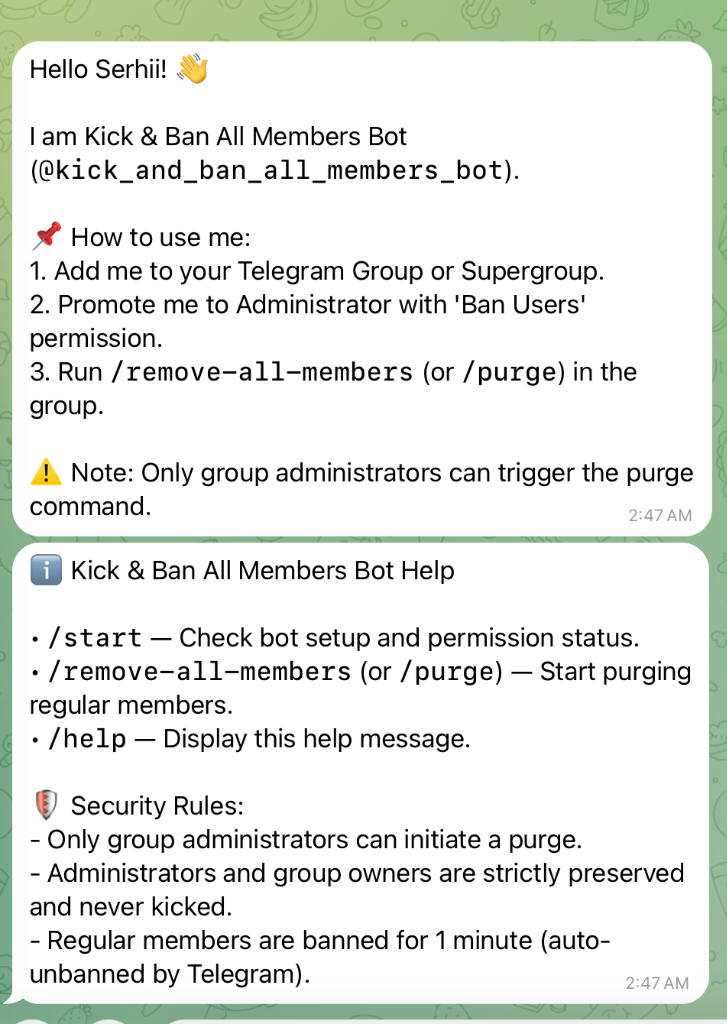
High-throughput Telegram group moderation bot using hybrid Webhook dispatching, Pyrogram MTProto member streaming, 60-second temporary soft kicks, and FloodWait auto-recovery.
Event-driven Python Telegram-to-WordPress bridge that publishes channel messages, HTML formatting, and high-resolution photos directly to WordPress via the REST API.
Stateless Python Telegram bot that encodes ASCII text and URLs into high-density Code 128 PNG barcodes in memory using python-barcode and BytesIO streams.
Stateless Python Telegram bot that converts text and URLs into crisp 512x512 QR code PNGs in memory using python-qrcode, Pillow BOX resampling, and BytesIO streams.
Discover how to use `pyproject.toml` to create, manage, and distribute Python packages for modern Python development. This comprehensive guide covers everything from build systems to dependency management and best practices for modern Python development.
Learn how to use the `__main__.py` file to make your Python packages executable. This guide covers the purpose of `__main__.py`, how it differs from `__init__.py`, and best practices for creating command-line interfaces.
A comprehensive guide to `__init__.py` in Python packages. Learn its core purpose, the hoisting pattern, package security with __all__, namespace packages, and 2026 best practices.
A step-by-step guide to resolving the common `ModuleNotFoundError` for the `pre_commit` module. Learn how to identify the root cause and apply the right fix to get your Git hooks working again.
A comprehensive guide to Git merging. Learn how to read and resolve merge conflicts, choose between squash, true merge, and fast-forward strategies, and understand when to use rebase vs. merge for clean project history.
Learn how to write Row Level Security (RLS) policies in Supabase to ensure users can only edit their own profile data. This guide covers practical SQL examples, common pitfalls, and best practices for secure database access control.
Learn how to use Check Constraints in Supabase to enforce data rules and maintain integrity. This guide covers practical examples, safe migration techniques, and error handling.
When you are typing away in your terminal, `git fetch` and `git fetch origin` probably feel exactly the same. In fact, if you only ever work on standard, single-team projects, you might go your entire career without realizing there is a difference at all. However, Git is highly configurable. The moment you step into open-source development or complex team architectures, that little missing word (`origin`) suddenly completely changes how Git behaves. Here is the candid truth about what Git is actually doing behind the scenes.
Learn why Firestore throws the error "A document must have an even number of path elements" and how to fix it by understanding the structure of Collections and Documents in Firestore.
Finding a bug is like detective work-except the crime scene is your code, and the suspect is one of your last 200 commits. You know the code worked last week, and you know it's broken now, but finding the *exact* moment it failed can take hours of manual checking. Enter `git bisect`, a powerful tool that uses a binary search algorithm to efficiently find the offending commit.
Creating a color palette where **every** color is readable against **every other** color is a high-level design challenge. As the number of colors in your palette increases, the "contrast space" shrinks significantly. In this article, we'll build a script that uses an **iterative "Collision-Check" algorithm**. It generates a candidate color, checks it against every color already in the palette, and only keeps it if it passes the WCAG AA threshold against all of them.
Designing a beautiful UI is pointless if half your users can't read it. Whether it's a person with a visual impairment or someone trying to check their phone on a sunny day, color contrast is the secret sauce of accessible design. The WCAG (Web Content Accessibility Guidelines) provides a mathematical way to ensure text stands out against its background. Let's integrate a "Contrast Checker" into our Python toolkit.
Converting colors in Python is a fascinating mix of dictionary lookups (for names like "tomato") and coordinate geometry. While we can use the built-in `colorsys` module for some parts, we'll need the `webcolors` library to handle CSS names and some custom math to reach the more "exotic" formats like **HWB** and **CMYK**.
Learn how to detect Google AdSense on any website using Python. Covers fast HTML scanning with BeautifulSoup, ads.txt validation, and headless Playwright automation to bypass bot protection and lazy loading.
Learn how to use the `simpleeval` library in Python to safely evaluate user-defined expressions, build a dynamic business rules engine, and handle complex data types with `EvalWithCompoundTypes`. This guide includes practical examples and comparisons with other evaluation methods.
Dynamic QR codes allow you to change the destination URL after printing. This article shows how to build a simple URL redirector using Flask and SQLite in Python.
gRPC is a high-performance RPC framework ideal for microservices. This article provides a practical example of implementing gRPC in Python, detailing when to choose gRPC over REST for inter-service communication.
A comprehensive guide to running gRPC on AWS. Covers API Gateway HTTP/2 limits, AWS Lambda gRPC integration, full bi-directional streaming on ECS/ALB, and AWS architectural alternatives.
A deep dive into distributed tracing in Python microservices, exploring how to link logs across services using Trace and Span IDs for enhanced observability.
How Python annotations can be used for advanced scenarios beyond type hinting, such as declarative dependency injection, runtime contract enforcement, schema generation, and custom configuration.
Authentication Middleware is a crucial component for securing an API by inspecting incoming requests for credentials (like a JWT or API Key) and validating them **before** the request reaches the route handler. This ensures every protected endpoint is secured automatically and cleanly.This example demonstrates how to implement a custom authentication middleware to check for a required `Authorization` header and either inject a valid user/context or reject the request early.
I'm a Senior Software Engineer & System Architect specializing in Python, high-throughput web backends, and cloud infrastructure (AWS, GCP, Vercel). Currently engineering production data systems at nCube and Modigie, I built hrekov.com to ship privacy-first developer utilities, REST APIs, Chrome extensions, and engineering guides—all documented transparently in public.